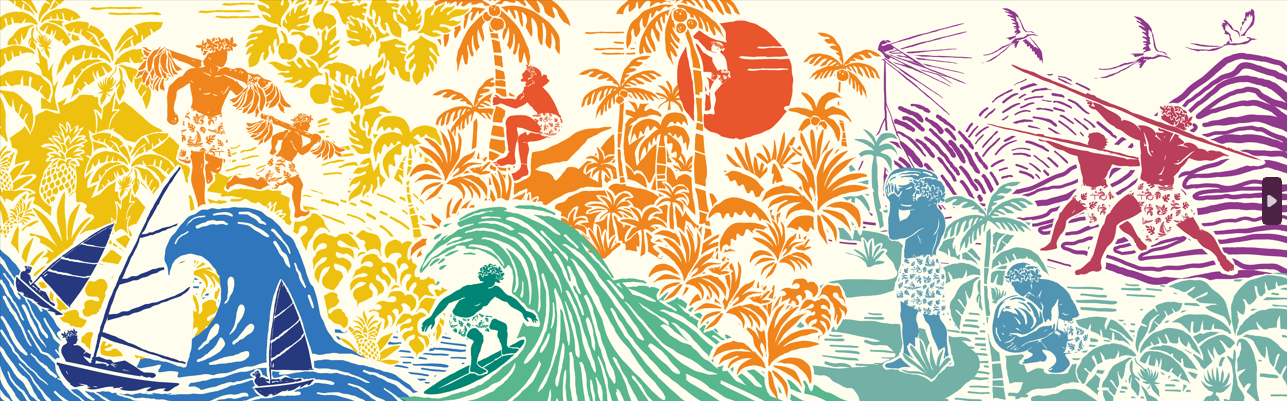
Parce que le patrimoine culturel du Fenua fait partie intégrante de sa richesse, la SOCREDO, en ancrant son calendrier 2027 dans les sports traditionnels du Pacifique, réaffirme son attachement sincère au noyau de son identité et de celle de ses clients.
Réalisé en partenariat avec la Fédération ’Āmuitahira’a Tū’aro Mā’ohi, ce calendrier est une invitation à découvrir les sports du Pacifique à travers leurs histoires, leurs traditions et les liens qu’ils tissent entre les peuples.
Ces disciplines prennent racine dans des territoires et des cultures qui leur sont propres. Cependant, elles reflètent également une histoire commune. À l’occasion des Jeux du Pacifique 2027, nous avons souhaité explorer ces traditions au-delà de la seule Polynésie et célébrer la richesse d’un patrimoine partagé par les nations du Pacifique. Ce calendrier porte ainsi une ambition simple : célébrer la fraternité qui, d’une île à l’autre, nous rassemble.
Nous avons conscience que l’univers des Tū’aro Mā’ohi est bien plus vaste que l’aperçu que nous offrons à travers ce calendrier. Ainsi, nous ne prétendons pas en livrer une version exhaustive ni définitive. Notre ambition est plus humble : donner à chacun l’envie de découvrir, de comprendre et de transmettre à son tour ce qui fait la beauté de notre culture.
Ces textes sont proposés en trois langues (tahitien, français et anglais) afin de refléter la diversité culturelle du Pacifique et de permettre à chacun de s’approprier ces récits.
Les illustrations qui accompagnent ce calendrier proposent une interprétation artistique contemporaine de ces traditions, sans prétendre se substituer à leurs formes traditionnelles de représentation.
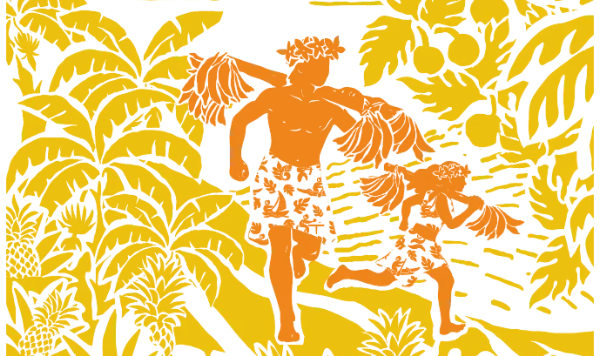
Le goût de l'effort. La course des porteurs de fruits célèbre l'endurance et la capacité à ne pas renoncer avant la ligne d'arrivée. Cet état d'esprit qui fait de la persévérance une force indispensable, se retrouve aujourd'hui...
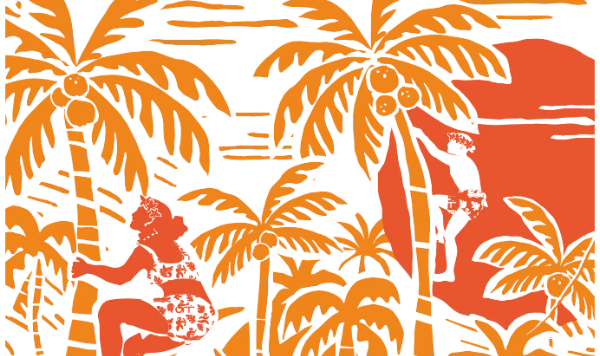
L'héritage ancestral. Hérité des savoirs faits traditionnels du Pacifique, le grimper de cocotier célèbre un lien profond avec la nature et des gestes transmis de générations en générations.
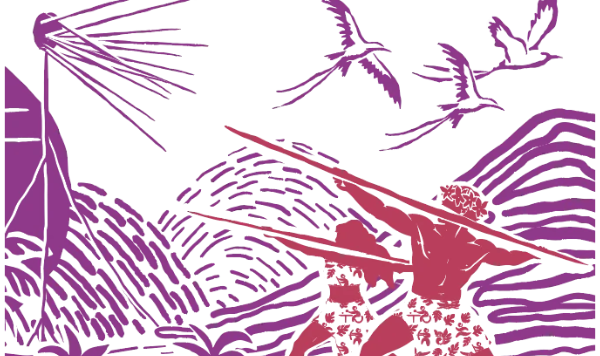
L'art de la précision. La pratique du javelot repose sur un équilibre entre puissance, précision et maîtrise du geste, savoir-faire que l'on retrouve, aux Jeux du Pacifique, dans l'épreuve du tir à l'arc...
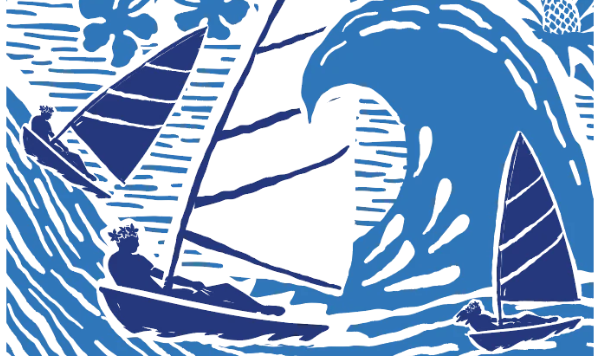
Le fluidité traditionnelle. Aux Jeux du Pacifique, le va'a se pratique en pirogue V1, V6 et V12 sur des distances allant du sprint de 500 m au marathon bien plus long...

La symbiose avec l'océan. Sur la crête des vagues, chaque mouvement compte. La voile, comme le surf, demande anticipation, adaptation et lecture des éléments.
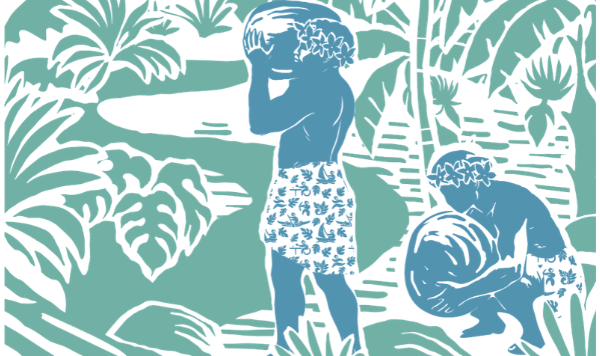
La force comme moteur. Le lever de pierre valorise la force, historiquement vue comme le symbole de la respectabilité des guerriers...
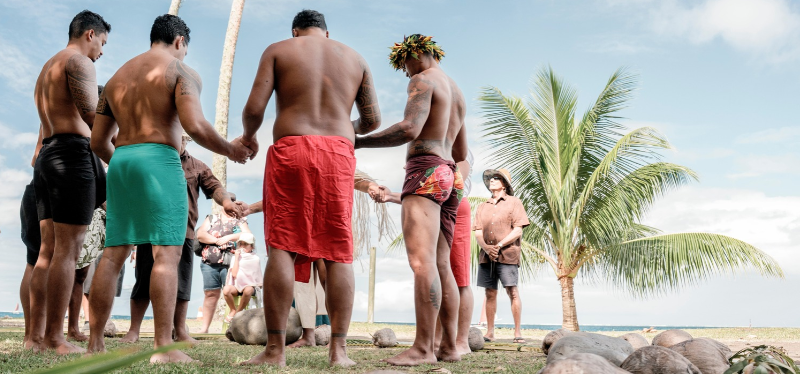
Fondée en 2003, la Fédération ’Āmuitahira’a Tū’aro Mā’ohi (FATM) œuvre à la transmission, la valorisation et le développement des sports traditionnels polynésiens. Elle rassemble aujourd’hui plusieurs centaines d’athlètes, licenciés sur l’ensemble des cinq archipels de la Polynésie française et sur les îles du Pacifique.
Chaque année, entre juin et juillet, la fédération organise le Heiva Tū’aro Mā’ohi, temps fort de son calendrier sportif. Cet événement rassemble des compétiteurs venus de l’ensemble du Pacifique : Nouvelle-Zélande, Hawaï, Rapa Nui, îles Cook, Tonga, Samoa, Fidji, Nouvelle-Calédonie…
Et bien d’autres îles ! Les athlètes s’y affrontent dans les disciplines emblématiques du patrimoine sportif mā’ohi, qui reflètent le mode de vie traditionnel des Anciens.
Le rayonnement de ces épreuves dépasse largement les frontières polynésiennes : depuis plusieurs années, des athlètes tahitiens participent à des compétitions internationales, notamment à Hawaï lors du Te Moana Nui Traditionnel Gamme i Vaihi, aux îles Cook lors de la Emo Tu’aro Maori ou encore à Miami pour le Heiva I Miami.
Notons que ce mouvement d’internationalisation s’accélère en 2025 avec la création de la Te Moana Nui Ancestral Heritage, fédération internationale des sports ancestraux, qui réunit cinq nations du Triangle polynésien, à savoir la Polynésie française, Hawaï, Rapa Nui, la Nouvelle-Zélande et les îles Cook.
Te ‘ohipa nei te ‘Āmuitahira'a Tū'aro Mā'ohi (FATM), tei ha’amauhia i te matahiti 2003, no te ha’aparare, no te ha’afaufa’a ‘ē no te fa’ahotu i te mau’ ohipa tū'aro tumu no Porinetia. I teie mahana, te ’āmui nei tau hānere feia tū’aro, tei tāpa’ohia i roto i te mau ta’a motu ‘e pae no Porinetia farāni ‘ē no te mau motu no Patitifa.
I te mau matahiti ato’a, mai te ‘āva'e tiunu ‘ē tae atu i te ‘āva'e tiurai, ‘e fa’anaho te ‘Āmuitahira'a i te Heiva Tū'aro Mā'ohi i te hoê tuha’a faufa’a roa o tā na tārena tū'aro. Te ha’aputuputu nei teie ‘ohipa i te feia tata'u no te mau fenua ato’a no Patitifa: Aotearoa, Vaihi, Rapa Nui, Raroto’a mā, Tonga, Samoa, Fītī, Taratoni... ‘ē te tahi atu mau motu ‘e rave rahi! E tata'u te mau ta’ata tū’aro i roto i te mau fa’anahora’a tuiro’o no te mau tū’aro Mā'ohi, o te fa’a’ite nei i te huru orara’a tumu o te mau tupuna.
Ua tu’i roa te ro’o o teie mau tata’ura’a i ‘ō roa mai i te mau ‘ōti’a no Porinetia. E rave rahi matahiti te maoro, ua ‘āmui atu te mau ta’ata tū’aro no Tahiti i roto i te mau tata'ura’a no te ao ta’āto’a, i Vaihī iho ā rā i te taime o Te Moana Nui Traditionnel Gamme i Vaihi, i Raroto’a mā no te Emo Tu'aro Maori, ‘ē ‘aore ra, i Miami no te Heiva I Miami.
A tāpa’o na ē, ua ‘oi’oi teie fa’anahora’a o te ao ta’āto’a i te tupura’a i te matahiti 2025 nā roto i te ha’amaura’a o Te Moana Nui Ancestral Heritage,(Te faufa’a ‘āia tupuna Moana nui) te hoê tā’atira’a no te ao ta’āto’a i te pae no te mau ‘ohipa tū’aro ‘a te mau tupuna, ‘o te tāhoê nei ‘e pae nūnaa no te ao mā’ohi, ‘oia ho'i, Porinetia farāni, Vaihī, Rapa Nui, Aotearoa, ‘ē o Raroto’a mā.
Founded in 2003, the ’Āmuitahira’a Tū’aro Mā’ohi Federation (FATM) works to pass on, promote and develop traditional Polynesian sports. Today it brings together several hundred licensed athletes across all five archipelagos of French Polynesia and the islands of the Pacific.
Every year, between June and July, the federation organises the Heiva Tū’aro Mā’ohi, highlight of its sporting calendar. The event gathers competitors from all over the Pacific: New Zealand, Hawaii, Rapa Nui, the Cook Islands, Tonga, Samoa, Fiji, New Caledonia… and many other islands! Athletes compete in the emblematic disciplines of the mā’ohi sporting heritage, which reflect the traditional way of life of our ancestors.
The reach of these events extends far beyond Polynesia’s borders: for several years now, Tahitian athletes have taken part in international competitions, especially in Hawaii for the Te Moana Nui Traditionnel Gamme i Vaihi, in the Cook Islands for the Emo Tu’aro Maorin or in Miami for the Heiva I Miami.
This drive towards internationalisation took a new impulse in 2025 with the creation of the Te Moana Nui Ancestral Heritage, the international federation of ancestral sports, which unites five nations of the Polynesian Triangle: French Polynesia, Hawaii, Rapa Nui, New Zealand and the Cook Islands.
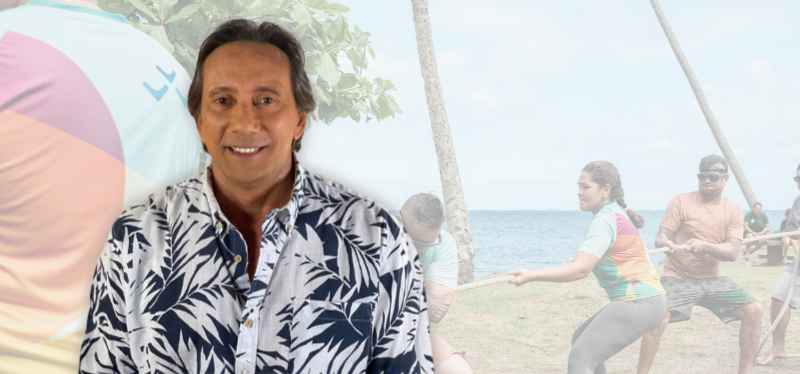
Originaire de l’île de Mangareva, Enoch Laughlin est le fondateur et l’actuel président de la Fédération Amuitahira’a Tū’aro Mā’ohi. Son engagement dans le monde du sport polynésien ne date pas d’hier puisqu’il a auparavant dirigé la Fédération polynésienne des sports mécaniques puis la Fédération polynésienne de jet-ski.
Parce qu’il a fait de la valorisation des sports traditionnels du Pacifique son principal combat, il est aujourd’hui l’un des piliers du Heiva.
Il est animé par la conviction que la pratique des sports traditionnels est une manière vivante de faire perdurer et de transmettre la culture du Pacifique.
Pour lui, les Tū’aro Mā’ohi s’inscrivent comme l’un des noyaux du renouveau contemporain de l’expression culturelle polynésienne, faisant du sport un véritable vecteur de transmission, d’identité et de mémoire.
No Ma’areva o Enoch Laughlin, te ta’ata ia i ha’amau ‘ē te peresideni no te ‘Āmuitahira'a Tū'aro Mā'ohi . ‘E ‘ere tō na fafaura’a i roto i te ao o te ‘ohipa tū’aro mā’ohi no nanahi nei, i fa’atere na ho’ i i te ‘Àmuitahiraa mā’ohi no te mau ‘ohipa tū’aro no te mau mauha’a mātini ‘ē i muri iho te ‘Āmuitahiraa no te mau mōtō teremiti no Porinetia.
No te mea ua ‘aro ‘oia no te ha’afaufa’ara’a i te mau ‘ohipa tū’aro tumu no Patitifa, ua riro ‘oia i teie nei ‘ei hoê o te mau pou o te Heiva . Nā te ti’aturira’a ē ua riro te ravera’a i te mau ‘ohipa tū’aro tumu ‘ei rāve’a puai no te pāruru ‘ē no te ha’aparare i te peu tumu no Patitifa ‘e tūra’i ra ia na.
I tā na hi’ora’a, ua riro te Tū'aro Mā'ohi ‘ei hoê o te mau tumu no te fa’a iho fa’ahoura’a i te parau no te tā’ere mā ‘ohi i teie tau, nā roto i te fa’arirora’a i te ‘ohipa tū’aro ‘ei rāve'a pāpū mau no te ha’apararera’a, no te iho tumu, ‘ē te ha’amana'ora’a.
Born in Mangareva, Enoch Laughlin is the founder and current president of the Amuitahira’a Tū’aro Mā’ohi Federation. His commitment to Polynesian sport goes back a long way: he previously headed the Polynesian Motor Sports Federation and then the Polynesian Jet Ski Federation.
Having made the promotion of traditional Pacific sports his main cause, he is today one of the hearts of the Heiva. He is driven by the conviction that practising traditional sports is a living way of preserving and passing on the culture of the Pacific.
In his view, Tū’aro Mā’ohi are at the core of the contemporary revival of Polynesian cultural expression, making sport a true vehicle for transmission, identity and memory.
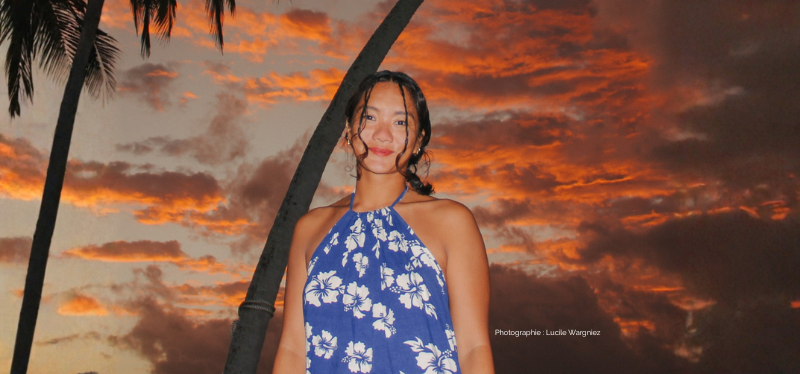
Née à Séoul en 1993, Pauline Martin est diplômée des Beaux-Arts de Paris et vit à Tahiti.
En complément de son travail de dessin à l’encre de Chine, elle développe aujourd'hui une activité de graphiste et d'illustratrice.
Puisant une grande partie de son inspiration dans les paysages polynésiens et dans les rencontres qui jalonnent son quotidien, elle collabore avec de nombreuses entreprises emblématiques du Fenua.
Outre la SOCREDO, son talent séduit en effet de nombreuses marques phares à travers la Polynésie, dans des domaines aussi divers que la restauration, l’hôtellerie, l’évènementiel ou encore le textile. Artiste dynamique et polyvalente, Pauline Martin inscrit son travail dans une démarche à la fois artistique et culturelle, contribuant activement à la valorisation de l’imaginaire polynésien.
> Pour en savoir + : découvrir Pauline Martin
‘Ua fanauhia ‘o Pauline Martin i Séoul, i te matahiti 1993, ‘ua noa’a mai tāna parau tū’ite i te fare ha’api’ira’a tuatoru ha’anihi nō Paris.
Ta’a ‘ē noa atu tāna ‘ohipa pāhoho’a ma te ‘inita tinitō, te rave ato’a nei ‘oia i te ‘ohipa fa’anaho pāpa’i hoho'a. ‘Ua noa’a mai te rahira’a o tōna urura’a mai roto mai i te mau ānoa nō te fenua Mā’ohi nei ‘e i roto ato’a i te mau ta’ata tāna e fārerei ra i te mau mahana ato’a. Te ‘opere nei ‘oia i tōna ‘aravihi i te mau taiete ‘itehia o te fenua nei. Nō reira, ta’a ‘ē noa atu i tō te SOCREDO, ‘ua tītari tāna tārēni i te mau taiete rarahi nō Pōrīnetia e ha’a nei i roto te mau vahi huru rau, mai te hōtēra, te fa’atupura’a ‘ōro’a ‘aore ra i te ho’ora’a ‘ahu.
Vahine ‘ainihi itoito ma ‘ite rau, ‘ua tāp’o ‘o Pauline Martin i tāna mau tāpura ‘ohipa i roto i te arata’ira’a o te tā’ere ‘e te nainai, nā te reira i ha’afaufa’a atu ā i te moemoeā i te orara’a Mā’ohi.
Born in Seoul in 1993, Pauline Martin is a graduate of Paris Beaux-Arts and lives in Tahiti. Alongside her India ink drawing, she now also works as a graphic designer and illustrator. Drawing much of her inspiration from Polynesian landscapes and from the encounters that punctuate her daily life, she collaborates with many of the Fenua’s most iconic companies.
Besides the SOCREDO, her talent has won over many leading brands across Polynesia, in fields as varied as food service, hospitality, events and textile. A dynamic and versatile artist, Pauline Martin approaches her work as both an artistic and a cultural endeavour, actively helping to promote the Polynesian imagination.
En poursuivant votre navigation sur ce site, vous acceptez que la Banque SOCREDO utilise des cookies pour analyser le fonctionnement et l'efficacité du site et vous proposer des publicités adaptées à vos centres d'intérêt.